


 by Zayed Al-Sayyed
Self-Defense in Arizona
 Physical fights and violent crimes are not uncommon in America. While there are self-defense laws in place in Arizona, it’s important you understand the legal limits to avoid an unforeseen lawsuit.
Arizona has “stand your ground” laws that are designed to provide citizens with the legal ability to protect themselves and their property from harm. Venturing outside of what’s covered in Arizona’s self-defense laws can land you in a tricky situation.
In this article, we’ll cover everything you need to know about Arizona self-defense laws, including notable exceptions and a real-life example.
Arizona Self-Defense Laws
A.R.S 13-404 explains that physical force is allowable if the individual believes, “that physical force is immediately necessary to protect himself against the other’s use or attempted use of unlawful physical force.”
Furthermore, A.R.S 13-405 outlines deadly force laws. This statute says that individuals can use deadly force if a retreat from the situation isn’t possible. For example, a robber cornering you in your home. Running might not be an option and your only defense may be deadly force.
The use of physical and deadly force is evaluated on a case-by-case basis. A good rule of thumb is to avoid the use of deadly force if your family isn’t in immediate danger and has the ability to retreat from the situation. Using improper deadly force can lead to criminal charges, restitution payments, and a civil trial.
Exceptions to Self-Defense in Arizona
With anything, there are exceptions. Verbal altercations where there is no physical threat do not give individuals the ability to use self-defense. In addition, self-defense is not allowed when an individual is being arrested by a police officer.
Arizona statutes also prohibit the application of self-defense laws when an individual provokes another person into using physical force and does not attempt to retreat.
An Example of Arizona Self-Defense Laws
 There are many examples of Arizona self-defense laws in real-life situations, but this is one of the most notable ones. In November 2011, David Appleton was followed by Tom Pearson as a result of a road rage incident. David Appleton pulled over, removed his handgun from the glove compartment, and placed it on the passenger seat.
According to David Appleton, Tom Pearson approached his vehicle and began choking him through the driver’s side window. Before losing consciousness, David Appleton fatally shot Tom Pearson.
The result? David Appleton was originally charged with second-degree murder. Nearly 15 months after the initial incident, a grand jury decision freed David Appleton under Arizona self-defense laws.
Finding a Self-Defense Lawyer
Regardless of the severity of your self-defense situation, it’s important to partner with a qualified self-defense lawyer. Wrongful convictions, restitution, and trials are all potential outcomes if you aren’t properly navigating Arizona self-defense laws in the courtroom.
Our team at theZlawyer defends your self-defense rights. If you felt like you had no other option but to use physical or deadly force to protect your family, reach out to one of our team members today.
 by Zayed Al-Sayyed
What To Do After a Minor Car Accident in Arizona?
 Millions of auto accidents happen each year, from small fender benders to total losses. Unfortunately, auto accidents are no longer a “what if” situation but rather a “when.” Whether you were recently in a fender bender or are simply taking a proactive approach, it’s important you understand what to do after a minor car accident in Arizona.
What Does Arizona Law Require?
Arizona law requires drivers to pull over immediately following an accident. Although this might seem self-explanatory, fleeing the scene is a major crime, even if the accident was minor. Drivers should pull over to a spot with the least amount of traffic, such as a parking lot.
Next, Arizona law requires that you exchange information with the other involved party. A.R.S 28-663 describes that drivers are required to remit their name, address, vehicle registration number, and driver’s license and provide reasonable assistance if an individual is injured.
Failure to provide this information to the other involved party or an officer can result in a class 3 misdemeanor, which can come with up to 30 days in jail and $500 in fines. Being cooperative can prevent unnecessary criminal charges, even in minor fender benders.
Do I Need to Call the Police for Fender Benders?
Even if the accident is minor, it’s always best to call the police. This is because they can create an independent police report based on the facts of the situation, avoiding false claims. Additionally, if one party is injured, you must immediately call 911, which will dispatch police officers.
Steps to Take Following a Fender Bender
Keep these steps in mind during your next fender bender:
- Safely pull your car over to the side of the road, away from traffic.
- Make sure no one is hurt. If there are injuries, immediately call 911.
- Even if there are no injuries, consider calling 911 for a police officer’s presence and a formal police report.
- Exchange insurance information.
- Take video and pictures of any damage.
- Contact a personal injury lawyer.
Understanding Auto Insurance Laws in Arizona
 Arizona is considered an at-fault state when it comes to working out the details of insurance. This means the party responsible for the accident is generally required to pay for damages. If insurance isn’t enough to cover damages, the at-fault party can be sued to recover additional damages.
A.R.S. Sections 28-4135 and 28-4009 require every motor vehicle operating on public roadways to have insurance with a minimum of $25,000 per person in the case of injury or death and $15,000 in the event of injury or destruction of property.
Additionally, Arizona laws also set timeframes for insurance claims. Insurance companies must acknowledge the receipt of a claim within 10 days, investigate the claim within 30 days, and pay an approved claim within 30 days.
Contact a Qualified Attorney
The severity of fender benders can quickly spiral if false claims are made or the other party is severely injured. This is why it’s best to contact a qualified attorney, like our team at TheZlawyer. We can help you navigate what to do after a minor car accident in Arizona.
 by Zayed Al-Sayyed
Does a Cop Have to Tell You Why They Pulled You Over in Arizona?
 Were you recently pulled over in Arizona? Did the officer tell you why? Law enforcement officials don’t need to clearly state the rationale behind pulling you over, leaving you wondering about the legality of your stop. Let’s discuss when a cop has to tell you why they pulled you over in Arizona, your rights, and what you should do when being pulled over.
Does a Cop Have to Tell You Why They Pulled You Over in Arizona?
No, a cop does not have to tell you why they pulled you over, but law enforcement officials cannot pull you over without probable cause. If you take your violation or ticket to court, the cop will be required to share the rationale behind pulling you over. Being stopped unlawfully does happen, which is why many Arizona citizens record police interactions when they can.
Most officers will explain why you are being pulled over to facilitate a smooth process. However, some police officers will ask rhetorical questions. For example, a common question is, “Do you know how fast you were going?” It’s important to respond carefully, but honestly in these situations.
What Are Your Rights When Being Pulled Over?
You have rights when being pulled over in Arizona. First, you have the right to remain silent. You don’t need to answer probing questions, such as where you are traveling to or from. Next, you have the right to refuse a search. Officers can bypass this right if there is clear evidence that you have committed a crime, such as open alcohol in the passenger seat.
You also have the right to a lawyer. If you are detained, you do not need to answer any questions without a lawyer present. Be sure you express your wishes upfront. In addition, you do have the right to remain in your vehicle. If the officer does ask you to step out, it’s best to comply to avoid escalating the situation.
What Should You Do When Being Pulled Over in Arizona?
 When you get pulled over by Arizona law enforcement, remain calm and stop your car when it is safe to do so. Be sure you aren’t obstructing traffic and turn on your hazards. Next, roll down your window and keep your hands where the police officer can see them, such as on the steering wheel. Your passengers should abide by the same rules.
Police officers are trained to respond within a moment’s notice, which is why it’s important to avoid any sudden movements. Provide the officer with any requested documents, such as your driver’s license, registration, and proof of insurance. Sometimes, the officer will explain why you are being pulled over. It doesn’t hurt to ask, but don’t be confrontational.
Write down the officer’s badge number if you can and gather witness contact information if you believe you are being unlawfully pulled over. Then, contact a qualified attorney that can walk you through the next steps and legal proceedings.
Summary
Are you wondering why you were pulled over and ticketed? It can be difficult to pinpoint the rationale behind your ticket or arrest without going to court. In these situations, contact our team at The Law Office of Zayed Al-Sayyed right away.
 by Zayed Al-Sayyed
What Happens if You Hit a Pedestrian Jaywalking in Arizona?
 Each year, hundreds of pedestrians in Arizona suffer serious injuries from traffic collisions. While negligent drivers are part of the problem, sometimes, the pedestrian is partially at fault. Incorrect use of roadways, including jaywalking, can have serious repercussions, including injury, lawsuits, and monetary penalties.
In this article, we’ll explain the basics of jaywalking, how to determine the at-fault party, and how comparative negligence factors into damage awards.
Understanding Jaywalking Laws in Arizona
Jaywalking is not condoned in Arizona, but it’s also not illegal. Jaywalking is considered crossing an intersection at any area outside of the designated walkway or at the incorrect time. Arizona Revised Statute 28-793 is the section of Arizona law that contains jaywalking provisions.
If a pedestrian does elect to jaywalk, they must stay on the curb until it’s safe to cross. There can be no vehicles in sight before crossing the roadway. This means you shouldn’t try and run across the road when a car is coming. Although jaywalking is not specifically illegal in Arizona, pedestrians can get in trouble if it places them or motorists in unnecessary danger.
One of the only situations where jaywalking is expressly permitted in Arizona is between adjacent intersections with control signals. Cities in Arizona can impose different regulations. This makes it important to consult with an attorney well-versed in all Arizona regulations if you are in an accident involving jaywalking.
Who Is At Fault?
 If the city does not permit jaywalking and the pedestrian does so anyway, the pedestrian could be liable for the collision. Breaking the law and causing an accident can lead to automatic liability under the rules of negligence. However, if the pedestrian had the right to jaywalk, the motorist might be partially at fault.
In situations where jaywalking is permitted, the pedestrian must do so safely. Stepping into oncoming traffic would generate negligence on the pedestrian’s part. However, if a driver could have reasonably avoided the crash, they can be found at fault. A driver can’t just barrel through pedestrians even though they are jaywalking. Drivers still have a responsibility to prevent collisions.
How Does Comparative Negligence Factor In?
Sometimes, an accident isn’t all the fault of one party. This is where comparative negligence comes into play. In Arizona, even if one party is 99% at fault, they can recover compensation under pure comparative negligence laws.
For example, if a pedestrian is jaywalking, but a motorist isn’t paying attention, both parties can be partially at fault. The percentage that the pedestrian or motorist is found at fault determines the amount that they can claim in damages.
Summary
Arizona jaywalking laws can quickly become complex when accidents occur, especially if both parties are partially at fault. This makes it important to contact a qualified personal injury attorney that can help you maximize your damages in the event comparative negligence comes into effect.
Our team at The Z Lawyer has the experience and expertise you need in a jaywalking lawsuit. Reach out today to schedule your free consultation.
 by Zayed Al-Sayyed
How Many Drinks is 0.08 Alcohol Level?
 All states, including Arizona, have established the legal alcohol limit at a BAC of 0.08 in an attempt to prevent injuries, death, and property damage stemming from impaired driving. Unless you keep a breathalyzer on you at all times, it can be difficult to know when you’ve exceeded the legal limit.
Getting pulled over for impaired driving, or worse, causing an accident, can leave you in a tough position with lawsuits and jail time on the table. This makes it important to understand the basics of BAC, its importance, how drinks influence BAC, and potential side effects.
If you do find yourself on the hook for impaired driving, it’s important that you reach out to a qualified attorney right away to minimize financial and behavioral penalties.
What is BAC?
Blood alcohol concentration, known as BAC, is a measurement of how much alcohol is in your bloodstream. BAC is calculated as a ratio of ethyl alcohol per 100 mm of blood. This means if you have a BAC of 0.05, you have 0.05 grams of alcohol for every 100 mm of blood.
 Why is BAC Important?
BAC is important to determine when you shouldn’t operate a vehicle and it’s time to call a taxi or Uber. The general rule of thumb is that it takes your body one hour to process a standard alcoholic drink. If you consume more than one drink in an hour, you can have high concentrations of alcohol in your system, which makes it more difficult for your liver to metabolize.
Alcoholic drinks impact each person differently and can depend on various factors, like weight, size, height, health history, and more. However, assessing your BAC eliminates the need to evaluate these subjective factors and gives you concrete information on your level of impairment.
How Do Drinks Influence BAC?
The types of drinks you consume can impact your BAC differently. For example, a seltzer or beer might not have as profound of an impact compared to a shot of hard liquor. For each drink you consume, you can expect your BAC to go up around 0.02, meaning you reach the legal BAC limit after four drinks. If you have a smaller frame or process alcohol slower, your drink count can be further limited.
What are the Side Effects of BAC?
The higher your BAC, the more side-effects you can expect. Common physical effects of BAC include delayed muscle coordination, altered judgment, lower self-control, less reasoning, and memory loss. These physical side effects can come into play well before you reach the legal BAC of 0.08, making it important to understand how your body reacts to alcohol.
Summary
Analyzing your impairment levels can be subjective, which is why BAC is widely used as a tool of enforcement. If you do find yourself in trouble in Arizona for exceeding the legal BAC, it’s essential that you contact an attorney right away.
Impaired driving in Arizona can be a serious crime, which is why you need the right team advocating on your behalf. Reach out to our team at The Law Office of Zayed Al-Sayyed today to set up your consultation.
 by Zayed Al-Sayyed
Arizona Car Accident Laws
 Vehicle accidents are a common occurrence in Phoenix, Arizona, with recent studies showing over 40,000 accidents in 2021 alone. When it comes to handling the aftermath of a car accident in Arizona, you want to be aware of the main laws in effect.
If you’re interested in learning more about accident reporting, comparative negligence, and the statute of limitations surrounding Arizona car accidents, this blog is for you.
Do You Need to Report the Accident?
Arizona laws don’t require individuals to personally report the incident. However, if any of the following occur, law enforcement officials are required to generate a written report:
- Injury
- Fatality
- Property damage that exceeds $1,000
- Citations issued to any involved parties
 Even if you don’t plan on personally reporting the incident, you must remain on the scene until all necessary information is exchanged. Fleeing the scene might upgrade your small fender-bender to a hit and run misdemeanor or felony.
A hit and run misdemeanor occurs when you cause damage to another vehicle and fail to stop, while failing to stop after an accident that causes physical injury is classified as a hit and run felony.
How Does Comparative Negligence Work?
Often, car accidents aren’t the fault of just one party, which is why Arizona laws follow comparative negligence. Individuals that share responsibility for car accidents can recover compensation for their losses, even if they are the majority at fault. Comparative negligence percentages are determined by the court after reviewing all of the facts surrounding the accident.
This means if a driver is 95% at fault, they can still receive compensation. However, any compensation they receive will be reduced by their negligence percentage. Let’s say that you sustain $5,000 worth of vehicle damage and you are found 25% at fault. You may only receive up to 75% of the damage amount or $3,750.
What is the Statute of Limitations?
One of the most important car accident laws that Arizona enforces is a statute of limitations. Those involved in a car accident have two years from the date of the accident to report the incident to insurance carriers. Any claims after this deadline will most likely be denied and you will be responsible for repairs.
Additionally, if you are bringing a personal injury lawsuit against another involved party, you need to have your case filed by the two-year deadline. If you miss your window, you will most likely lose your ability to recover compensation for your losses. This is why it’s important that you contact a qualified Phoenix attorney as soon as possible.
Finding the Right Attorney
Whether you were the cause of a car accident or a victim, it’s important that you partner with the right attorney. Our legal team at The Law Office of Zayed Al-Sayyed understands that mistakes happen.
We want to work alongside you to find the most favorable outcome for your situation, regardless of which side of the fence you are on. Contact our team to schedule a consultation today.
 by Zayed Al-Sayyed
Do Pedestrians Have the Right of Way in AZ?
 Pedestrian right-of-way laws can be tricky in Arizona, especially with each municipality imposing slightly different regulations. However, following pedestrian right-of-way regulations in Arizona is necessary, regardless of if you are a motorist, pedestrian, or cyclist.
What are the Pedestrian Right-of-Way Laws in Arizona?
Although there are fewer right-of-way regulations that pedestrians must follow compared to motorists, Arizona law specifically states that pedestrians cannot cross an intersection or a roadway if an approaching vehicle does not have the proper time to stop. It’s much easier for a pedestrian to stop walking rather than a vehicle coming to a quick stop.
Crossing roadways and intersections in unmarked areas, also known as jaywalking, is also prohibited in Arizona. Pedestrians are only allowed to cross the street at designated walkways and if a walk signal is present.
When are Pedestrians Required to Yield to Drivers in Arizona?
Pedestrians are required to yield to drivers in certain situations. At intersections, pedestrians must wait until there is a green signal to cross. Pedestrians are never permitted to cross the roadway in front of an approaching vehicle.
On the contrary, drivers must always yield to pedestrians, even if pedestrians aren’t following the proper regulations in Arizona. Drivers must come to a complete stop before the crosswalk, allowing pedestrians adequate time and space to cross.
Is Road Walking Permitted in Arizona?
 Road walking is permitted if there is no sidewalk. If there is a sidewalk, Arizona pedestrians must walk on the sidewalk. When pedestrians do choose to walk on the road with no sidewalk, they should stay on the shoulder. In addition, pedestrians should walk in the opposite direction of oncoming traffic to give motorists a clear view. Runners and joggers should follow the same regulations.
How Can Pedestrians Avoid Collisions with Motor Vehicles in Arizona?
When motorist and pedestrian accidents happen in Arizona, there are often multiple parties at fault. This could be a pedestrian crossing the road at the wrong time or a motorist not paying full attention to the roadway. There are ways that pedestrians can help avoid collisions with motor vehicles in Arizona.
First, pedestrians should follow all applicable signs, including “walk” and “wait” signals at intersections. Even when pedestrians have a clear sign to walk, they should double-check oncoming traffic before stepping out onto the road. Furthermore, pedestrians should look out for turning vehicles to ensure a clear roadway.
What About Cyclists?
Cyclist regulations in Arizona can be complex. Motorized vehicles, like wheelchairs, are considered pedestrians, while bicycles and scooters are considered a mix between pedestrians and drivers.
Where the cyclist is operating can determine which rules must be followed. If the cyclist is on the sidewalk, they should follow pedestrian laws. On the contrary, if the cyclist is on the roadway, they should follow motor vehicle regulations.
What Happens if You Are Injured or Cause an Accident?
Regardless of whether you are the injured party or at fault for an accident, you want to be working with a qualified attorney in Arizona. Reach out to The Z Lawyer today to see what your options are for a lawsuit or collecting damages.
 by Zayed Al-Sayyed
Can Someone Sue You for a Car Accident in Arizona?
 Unfortunately, car accidents are a common occurrence. Studies show that the average American driver will be in at least three to four accidents in their lifetime. Does this surprise you?
If you were the cause of a car accident, you probably have dozens of questions floating around in your head, one of which is if someone can sue you. Simply put, yes. Someone can sue you for a car accident in Arizona. Let’s get into the specifics.
 Arizona’s Statute of Limitations for Car Accidents
Each state has a statute of limitations, which is the timeframe for bringing a lawsuit forward. Arizona’s statute of limitations for car accidents that cause injury is two years from the date of the accident. If two years pass, the individual generally loses their ability to sue you for damages. There are certain instances where you can be sued even after the two-year statute of limitations expires.
Knowing Potential Damages
The severity of the accident dictates the types of damages you can expect. Here are a few common damage claims:
- Medical Treatment – One of the most common types of damages is compensation for bills resulting from medical treatment. This can also include compensation for future medical care.
- Income – Lost income is another common damage claimed by victims of car accidents. Both past and future income can be part of the claim.
- Property Loss – Costs associated with vehicle repairs can also be included as a part of the lawsuit. Clothing, cell phones, and other items inside the vehicle can yield additional liability.
- Pain and Suffering – The injury doesn’t always need to be physical for someone to sue you for compensation. Anxiety, depression, and PTSD resulting from the accident all warrant a payout.
 These are some of the causes of monetary damages, but there can be other consequences you face after an auto accident. This includes license suspension and jail time. Minimizing negative consequences relies on working with a qualified attorney.
Ensuring a Favorable Outcome
Arizona works based on comparative negligence, meaning you might not be fully at fault for the auto accident. To ensure that you are receiving a fair outcome, it’s best to work with an Arizona personal injury attorney, like our team at The Law Office of Zayed Al-Sayyed.
If you’re interested in learning more about how our team can help you navigate the process of being sued for a car accident, reach out today to schedule a consultation.
 by Zayed Al-Sayyed
Does a Passenger Have to Show an ID in Arizona?
 By now, we’ve all seen the videos of passengers refusing to show an ID during traffic stops. Is this legal? Although you might have numerous reasons for safeguarding your ID, legislation in Arizona does give authority figures the ability to require ID presentation in certain scenarios.
In this article, we’ll cover the situations that require ID remittances, what rights you have as a passenger in Arizona, and the potential consequences of noncompliance. If you have already been involved in a law enforcement encounter, it’s important to seek representation right away.
Arizona is a Stop and ID State
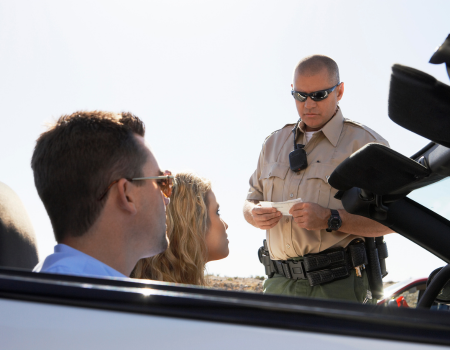 In Arizona, law enforcement officers can request your identification if they have reasonable suspicion to believe you are involved in criminal activity. Reasonable suspicion means that you have or are in the process of committing a crime. Law enforcement officials must be able to prove reasonable suspicion, as a “hunch” won’t hold up in court.
The other situation that gives law enforcement the right to request your ID is lawful detention. Lawful detention triggers the Stop and ID law and is commonly seen in traffic stops, investigatory stops, and arrests.
If law enforcement does have legal grounds for requesting your ID, you must provide your true full name and furnish your ID. However, you do not need to carry any type of identification that substantiates your address or date of birth.
Your Arizona ID Rights
Outside of reasonable suspicion and lawful detention, you do not need to show law enforcement your ID or answer any questions regarding your activities or destinations. Whether you are in the midst of a routine traffic stop or any other conversation with law enforcement, you have the following rights under Arizona law:
- Right to Remain Silent – Although Arizona’s Stop and ID law requires you to furnish your ID and legal name in certain situations, you have the right to avoid any other information requests or probing questions.
- Right to Refuse Consent to Search – Arizona law enforcement officials cannot search you or your vehicle without your consent, probable cause, a warrant, or legal grounds.
- Right to an Attorney – If you are being detained, you have the right to request an attorney during questioning.
These rights apply to both drivers and passengers in a motor vehicle. Knowing these rights can help you prepare if you are pulled over or detained by law enforcement officials.
Consequences of Noncompliance
 Failing to provide an ID in Arizona is a criminal offense. If law enforcement has reasonable suspicion and you refuse to show an ID, you could be detained. Both failure to provide a license and failure to provide identification are considered class 2 misdemeanors, with up to $750 in fines. A maximum of 4 months in jail and probation can also be consequences depending on the circumstances.
Summary
Do you believe you were wrongly required to show an ID in Arizona? How about being detained because of refusing identification? If you find yourself in either of these situations, contact our team at The Law Office of Zayed Al-Sayyed right away. It’s important to have the right representation when working through these matters.
 by Zayed Al-Sayyed
Penalties for Illegal Possession of a Firearm in Arizona
 Arizona laws are constantly changing, especially surrounding firearm possession. Generally, Arizona residents have the right to carry firearms unless the law deems them a prohibited possessor. Seems pretty straightforward, doesn’t it?
Well, not exactly. An Arizona resident can be considered a prohibited possessor for a variety of reasons, which is why you need to understand the basics of Arizona gun laws and the potential penalties for illegal firearm possession.
What are Arizona Gun Laws
Arizona gun laws are fairly lenient compared to other states in the nation. There is no rigorous background check, state permit, or license needed to buy a firearm. In addition, your firearm doesn’t need to be registered, even if you conceal carry. However, there are specific places where firearms are prohibited, including:
- Schools
- Childcare centers
- Restaurants and bars
- Jails and prisons
- Power and nuclear plants
- Polling places during elections
- Posted private property
- Courthouses and other federal buildings
Understanding where firearms are specifically prohibited can help you avoid stiff penalties and criminal charges.
What is a Prohibited Possessor?
 Unless you are considered a prohibited possessor, Arizona residents have the right to own guns. Immigration status and life history are the two main reasons why an Arizona resident would receive prohibited possessor status. Here are a few more situations where you might be considered a prohibited possessor:
- You are a danger to yourself or others and fit the definition under Arizona Statute 36-640.
- You are a convicted felon.
- You are incompetent to stand trial.
- You are found not guilty as a result of insanity in a criminal case.
- You are incarcerated, on house arrest, parole, or other monitoring.
- You are a foreign national present in Arizona with a nonimmigrant visa.
In some situations, you can have your gun rights reinstated.
What are Penalties for Illegal Possession of a Firearm in Arizona?
 Illegal possession of a firearm in Arizona can come with serious penalties and fines, including:
- Providing a firearm to a person with a known gang conviction is considered a class 3 felony, with up to seven and a half years in prison.
- Possession of a firearm as a prohibited possessor is a class 4 felony, with up to three years in prison.
- Possession of a firearm on school property is a class 6 felony, with up to one and a half years in prison.
- Providing a firearm to a prohibited possessor is a class six felony, with up to one and a half years in prison.
If you are accused of any of these items, contact a lawyer right away to minimize your jail time and penalties.
Summary
Are you considered a prohibited possessor and trying to get your status changed? How about being convicted of illegal possession of a firearm in Arizona? Regardless of your situation surrounding firearms, you want to be sure you have the right professional standing behind you. Contact to our team at The Z Lawyer today to see how we can help you navigate Arizona firearm laws.
