

 por Zayed Al-Sayyed
What Is the Riskiest Places for Bicyclists in Arizona? Dangerous Roads, Crash Statistics & Your Legal Rights
Arizona is one of the best states for year-round cycling thanks to its warm climate and extensive network of roadways and recreational paths. However, those same roads can present significant dangers for cyclists. Heavy traffic, high-speed arterial roads, busy intersections, and distracted drivers contribute to hundreds of bicycle crashes each year. While there is no official designation for the riskiest places for bicyclists in Arizona, crash statistics and transportation studies consistently point to urban intersections and major multi-lane roadways as the most hazardous places for bicyclists.
Recent national studies have also identified several Arizona cities among the most dangerous in the country for cyclists. Whether you ride for exercise, recreation, or daily commuting, understanding where crashes happen and how to avoid them can help reduce your risk of serious injury.
 Arizona Has Some of the Nation’s Most Dangerous Cities for Cyclists
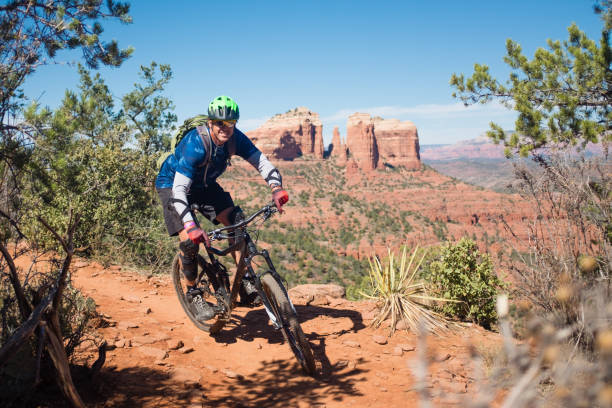
A recent ConsumerAffairs study analyzing bicycle fatalities in the nation’s 100 largest cities found that Arizona had more cities ranked among the most dangerous for cyclists than any other state. While Tucson received the highest ranking among Arizona cities, Mesa, Glendale, Scottsdale, Phoenix, Gilbert, and Chandler also appeared on the list, demonstrating that bicycle safety is a statewide concern.
Riskiest Places for Bicyclists in Arizona
Arizona cities ranked for cyclist danger include:
- Tucson – #5 most dangerous city in the U.S.
- Mesa – #6
- Glendale – #8
- Scottsdale – #13
- Phoenix – #39
- Gilbert – #46
- Chandler – #48
- Tucson recorded 1.47 cyclist fatalities per 100,000 residents
- Tucson’s fatality rate is more than four times the national average
Although Phoenix ranked lower nationally, it consistently records the highest number of bicycle crashes in Arizona due to its population size and heavy traffic.
Where Do Most Bicycle Accidents Occur?
Transportation experts agree that intersections remain the most dangerous location for bicyclists. Drivers are making turns, changing lanes, entering traffic, and navigating multiple traffic signals simultaneously. Even a brief moment of distraction can lead to a devastating collision with a cyclist.
Common high-risk locations include:
- Busy signalized intersections
- Commercial shopping center entrances
- Driveways entering major roads
- Highway frontage roads
- High-speed arterial streets
- Multi-lane roadways with limited bike lanes
- Construction zones
- Areas with poor nighttime lighting
Many crashes happen because motorists simply fail to notice bicyclists until it is too late.
Arizona’s Most Dangerous Roads for Cyclists
Several roadways throughout the Phoenix metropolitan area repeatedly appear in crash reports because they combine high vehicle speeds, multiple intersections, and heavy traffic volumes. These roads are especially challenging for cyclists, even when bike lanes are present.
Phoenix
Some of the most dangerous roads include:
- Indian School Road
- McDowell Road
- Van Buren Street
- Camelback Road
- Thomas Road
- Bell Road
- Baseline Road
- Glendale Avenue
Tempe & Mesa
Cyclists should use extra caution on:
- University Drive
- Apache Boulevard
These corridors experience heavy bicycle traffic due to Arizona State University, public transportation, and nearby businesses.
Scottsdale
Higher crash risks have also been identified along:
- Scottsdale Road
- Shea Boulevard intersections
- Frank Lloyd Wright Boulevard corridor
Why Are These Roads So Dangerous?
Many of Arizona’s busiest roads were designed primarily for automobiles rather than bicycles. Wide roadways, higher speed limits, frequent driveways, and heavy turning traffic create numerous conflict points where drivers and cyclists occupy the same space.
Contributing factors include:
- Speed limits of 45–55 MPH
- Four- to six-lane roads
- Numerous commercial driveways
- Heavy turning traffic
- Limited protected bike lanes
- Large trucks and commercial vehicles
- Congested intersections
- Reduced visibility during sunrise and sunset
Higher speeds not only increase the likelihood of a crash but also make injuries significantly more severe.
 Common Causes of Bicycle Accidents
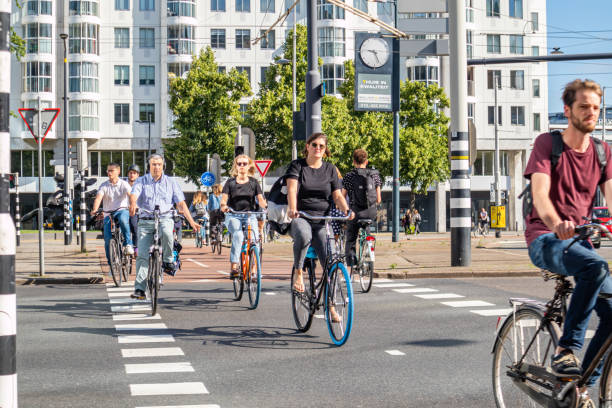
The majority of bicycle accidents are caused by driver negligence rather than cyclist error. Even experienced riders following the rules of the road can become victims when motorists fail to exercise reasonable care.
Frequent causes include:
- Distracted driving
- Texting while driving
- Failure to yield
- Left-turn collisions
- Right-hook accidents
- Speeding
- Unsafe lane changes
- Driving under the influence
- Opening vehicle doors into cyclists
- Failure to check blind spots
Arizona Bicycle Laws Every Driver Should Know
Arizona law provides important protections for bicyclists and places legal responsibilities on motorists who share the road. Understanding these laws can help determine liability after a bicycle accident.
Arizona drivers must:
- Leave at least three feet when safely passing a bicyclist.
- Wait until it is safe before passing if adequate space is unavailable.
- Yield when required by traffic laws.
- Avoid opening vehicle doors into moving traffic.
- Share the roadway safely with cyclists.
Violations of these laws may be evidence of negligence in a personal injury claim.
What Should You Do After a Bicycle Accident?
The actions you take immediately after a bicycle accident can play an important role in protecting both your health and your legal rights. Even if your injuries appear minor, seeking prompt medical treatment is critical because many serious injuries develop symptoms hours or days later.
After a bicycle crash you should:
- Call 911 immediately.
- Request a police report.
- Seek emergency medical care.
- Photograph the accident scene.
- Document your injuries.
- Preserve your damaged bicycle.
- Exchange insurance information.
- Obtain witness contact information.
- Avoid discussing fault.
- Contact an experienced bicycle accident attorney.
Common Bicycle Accident Injuries
Because bicyclists have little protection compared to vehicle occupants, even relatively low-speed collisions can result in life-changing injuries. Many victims require surgery, rehabilitation, and months away from work.
Serious injuries often include:
- Traumatic brain injuries
- Concussions
- Broken bones
- Spinal cord injuries
- Neck injuries
- Shoulder injuries
- Hip fractures
- Knee injuries
- Internal bleeding
- Severe road rash
- Permanent disabilities
Medical expenses can quickly become overwhelming without fair compensation from the responsible party.
Who May Be Liable for a Bicycle Accident?
Every bicycle accident is unique. Depending on the circumstances, more than one party may share responsibility for the collision. A thorough investigation can identify all potential sources of compensation.
Liable parties may include:
- Negligent drivers
- Commercial trucking companies
- Delivery vehicle operators
- Employers
- Government agencies
- Property owners
- Vehicle manufacturers
- Bicycle component manufacturers
An attorney can evaluate the evidence and determine who may be legally responsible.
How a Phoenix Bicycle Accident Attorney Can Help
Insurance companies often attempt to minimize bicycle accident claims by shifting blame onto the cyclist or disputing the severity of injuries. An experienced attorney understands these tactics and can build a strong case supported by medical records, witness statements, accident reconstruction experts, and other evidence.
A bicycle accident attorney can help by:
- Investigating the collision
- Gathering evidence
- Interviewing witnesses
- Reviewing surveillance footage
- Negotiating with insurance companies
- Calculating future damages
- Filing a lawsuit if necessary
- Pursuing maximum compensation
Frequently Asked Questions
Where do most bicycle accidents happen in Arizona?
Most bicycle accidents occur at busy intersections, commercial driveways, and high-speed arterial roads where vehicles frequently turn or fail to yield.
Which Arizona city is the most dangerous for cyclists?
Recent national rankings identified Tucson as the fifth most dangerous city in the United States for cyclists, with Mesa and Glendale also ranking in the top ten.
What is Arizona’s three-foot passing law?
Arizona law generally requires drivers to leave at least three feet of clearance when passing a bicyclist whenever it is safe to do so.
Can I recover compensation if I was partially at fault?
Yes. Arizona follows a pure comparative negligence system, meaning you may still recover compensation even if you were partially responsible for the accident, although your recovery may be reduced by your percentage of fault.
How long do I have to file a bicycle accident claim?
Most Arizona personal injury claims must be filed within the applicable statute of limitations, although exceptions may apply. Speaking with an attorney as soon as possible is recommended.
Contact an Experienced Phoenix Bicycle Accident Attorney
A bicycle accident can change your life in an instant, leaving you with serious injuries, expensive medical bills, lost income, and uncertainty about the future. If another person’s negligence caused your crash, you shouldn’t have to handle the financial and legal burden alone. An experienced attorney can investigate your accident, gather critical evidence, negotiate with insurance companies, and pursue the full compensation you deserve.
Why Choose The Law Office of Zayed Al-Sayyed?
- Free initial consultation
- Aggressive representation against insurance companies
- Experienced in Arizona personal injury law
- Personalized legal guidance throughout your case
- No attorney’s fees unless we recover compensation for you
Whether your bicycle accident occurred at a busy Phoenix intersection, on one of Arizona’s most dangerous roads, or anywhere else in the state, our legal team is committed to protecting your rights and helping you move forward with confidence. Contact The Law Office of Zayed Al-Sayyed today at (602) 952-9937 to schedule your free consultation and learn how we can help you pursue the compensation you deserve after a bicycle accident.
Helpful Resources:
- Arizona Department of Transportation – Arizona Motor Vehicle Crash Facts Report
- Arizona Governor’s Office of Highway Safety – Bicycle Safety
- National Highway Traffic Safety Administration – Bicycle Safety
- Centers for Disease Control and Prevention – Transportation Safety
- Arizona Legislature – Arizona Revised Statutes
 por Zayed Al-Sayyed
The Most Dangerous Roads for Truck Accidents in Arizona
Arizona serves as one of the nation’s busiest freight corridors, with thousands of commercial trucks traveling through the state every day. Major interstates like I-10, I-17, Loop 101, Loop 202, and US-60 carry everything from consumer goods to industrial freight, making them critical transportation routes. While these highways help keep Arizona’s economy moving, they also experience a significant number of serious truck accidents due to heavy traffic, high speeds, construction, and complex freeway interchanges.
Because of their massive size and weight, commercial trucks require much longer stopping distances than passenger vehicles. Even a minor mistake by a truck driver or another motorist can quickly escalate into a catastrophic collision. Understanding where these crashes happen most often can help drivers stay alert and reduce their risk while traveling throughout Arizona.
Most Dangerous Roads for Truck Accidents in Arizona
Several highways consistently rank among the most hazardous for commercial truck crashes because of traffic volume, merging traffic, congestion, and freight activity.
Interstate 10 (I-10)
Interstate 10 is Arizona’s busiest freight corridor and one of the most heavily traveled truck routes in the Southwest. Thousands of tractor-trailers travel this interstate daily between California, Arizona, New Mexico, and Texas.
Common danger zones include:
- Broadway Curve
- Deck Park Tunnel
- I-10/I-17 Split
- Mini Stack (Loop 202 & SR-51)
- Near Sky Harbor Airport
- 43rd Avenue
- 51st Avenue
- 75th Avenue
- 99th Avenue
Heavy congestion combined with constant lane changes makes I-10 one of the highest-risk highways for serious truck accidents.
Interstate 17 (I-17)
I-17 connects Phoenix with Northern Arizona while carrying both commuter traffic and commercial freight. Rush-hour congestion and numerous merging areas create dangerous driving conditions.
High-risk locations include:
- Indian School Road
- Thomas Road
- Camelback Road
- Dunlap Avenue
- The Stack Interchange
- I-10 Connection
Truck drivers frequently encounter sudden traffic slowdowns, aggressive merging, and limited reaction time throughout this corridor.
Other High-Risk Arizona Truck Routes
Additional highways where commercial truck crashes occur regularly include:
- Loop 101
- Loop 202
- US-60 (Grand Avenue)
- SR-51 connections
- State Route 143 near Sky Harbor Airport
These roadways combine high vehicle volumes with multiple freeway interchanges, increasing the likelihood of truck-related crashes.
Phoenix’s Most Dangerous Intersections
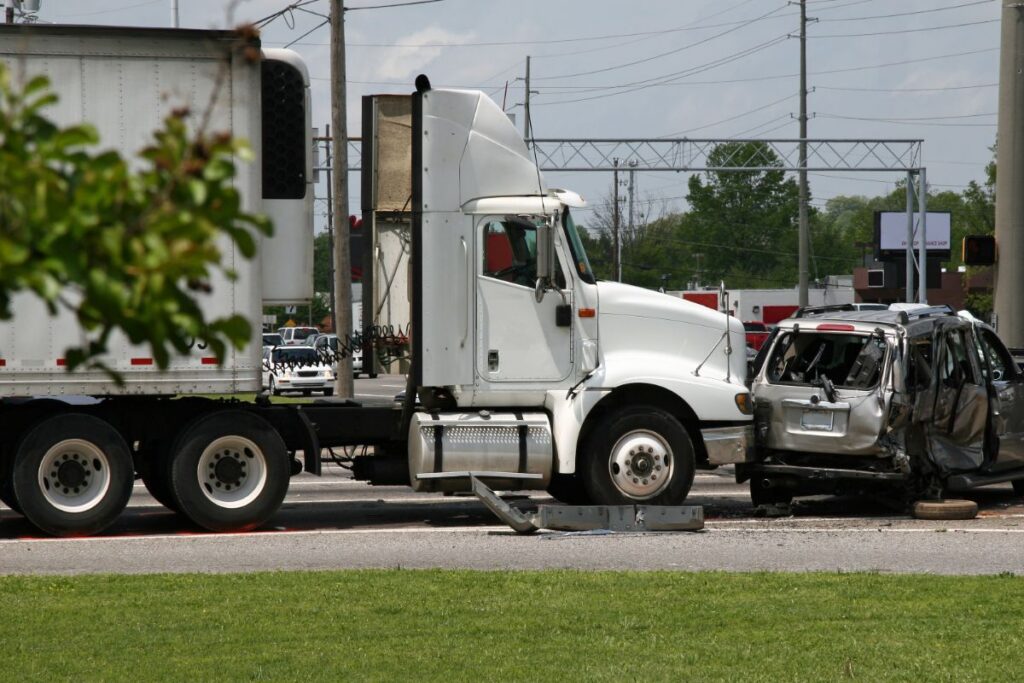
While freeways receive much of the attention, many serious truck collisions occur at busy intersections where commercial vehicles interact with commuters, pedestrians, and cyclists.
Some of the highest-risk intersections include:
- 19th Avenue & Camelback Road
- 35th Avenue & Bethany Home Road
- 67th Avenue & Indian School Road
- 43rd Avenue & Glendale Avenue
- 75th Avenue & Thomas Road
- 51st Avenue & Indian School Road
- 27th Avenue & Indian School Road
- Central Avenue & McDowell Road
- Bell Road & 35th Avenue
- Cave Creek Road & Cactus Road
Large intersections require trucks to make wide turns, stop longer distances, and navigate multiple lanes of traffic, all of which increase collision risks.
Why These Roads Are More Dangerous
Truck accidents rarely result from a single cause. Instead, they often involve several contributing factors that make Arizona’s busiest roads particularly hazardous.
The most common contributing factors include:
- Heavy commercial freight traffic
- High-speed freeway travel
- Driver fatigue
- Distracted driving
- Aggressive lane changes
- Short merge lanes
- Construction zones
- Poor visibility
- Tire blowouts caused by extreme Arizona heat
- Improperly secured cargo
- Mechanical failures
- Traffic congestion during rush hour
Arizona’s extreme summer temperatures can also contribute to tire failures, overheated brakes, and mechanical issues that increase crash risks for large commercial vehicles.
Common Types of Truck Accidents
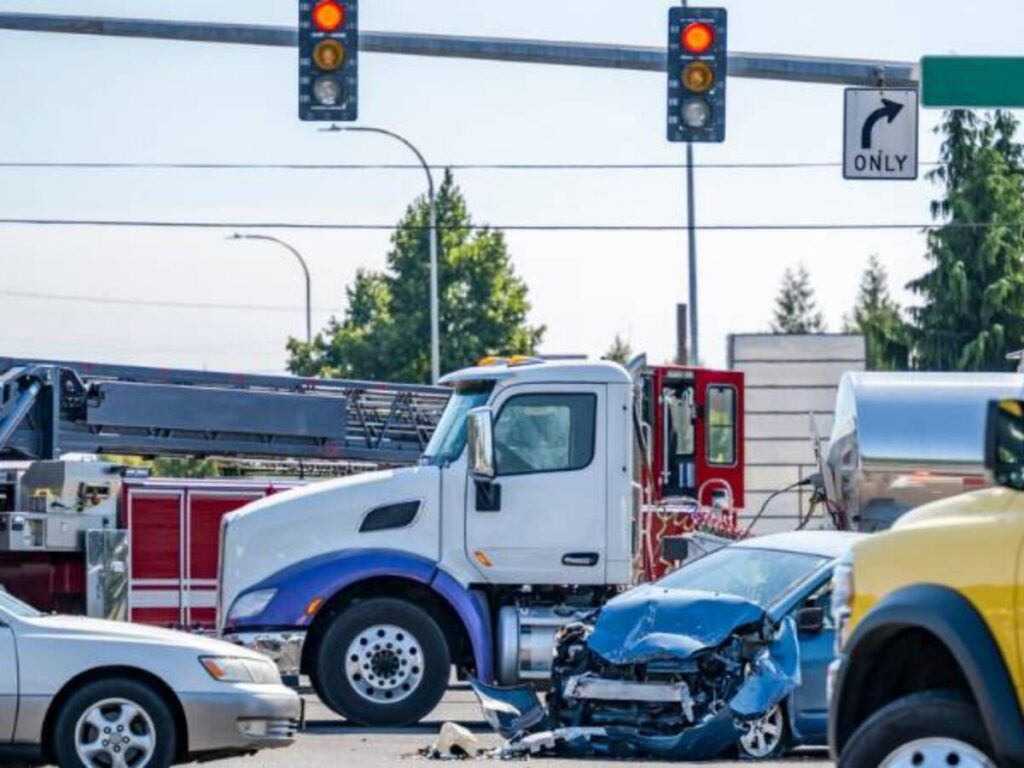
Commercial truck crashes often involve far more severe damage than passenger vehicle collisions because fully loaded tractor-trailers can weigh up to 80,000 pounds.
Common truck accident types include:
- Rear-end collisions
- Jackknife accidents
- Rollover crashes
- Wide-turn accidents
- Underride collisions
- Override collisions
- Sideswipe accidents
- Multi-vehicle pileups
- Cargo spill accidents
- T-bone collisions at intersections
These crashes frequently cause traumatic brain injuries, spinal cord injuries, fractures, internal injuries, and fatalities.
Arizona Truck Accident Statistics
Arizona continues to experience thousands of crashes involving large commercial vehicles every year. Maricopa County accounts for the majority of the state’s traffic collisions due to its large population and extensive freeway system.
Key traffic trends include:
- Maricopa County experiences over 70% of Arizona crashes.
- Phoenix remains Arizona’s busiest traffic corridor.
- Speeding continues to be a leading cause of severe crashes.
- Distracted driving remains a growing concern.
- Large urban intersections experience significant injury crashes each year.
- Commercial truck traffic continues to increase along Arizona’s major freight routes.
Safety Tips for Sharing the Road With Trucks
Drivers can significantly reduce their risk by understanding how commercial trucks operate and allowing them additional space.
Safety recommendations include:
- Stay out of truck blind spots.
- Avoid cutting in front of large trucks.
- Allow extra following distance.
- Never pass on the right during wide turns.
- Use turn signals early.
- Slow down during construction zones.
- Stay alert during heavy traffic.
- Avoid distracted driving.
- Never drive aggressively around commercial vehicles.
- Give trucks additional room during bad weather.
What Should You Do After a Truck Accident?
Truck accident claims are often much more complex than standard car accident cases because multiple parties may be responsible, including the trucking company, driver, maintenance providers, cargo loaders, or manufacturers.
If you’re involved in a truck accident:
- Call 911 immediately.
- Seek medical attention.
- Document the accident scene.
- Take photographs of all vehicles.
- Obtain witness information.
- Do not admit fault.
- Preserve medical records and repair estimates.
- Avoid speaking with insurance adjusters before understanding your legal options.
- Contact an experienced Arizona truck accident attorney as soon as possible.
Why Legal Representation Matters
Commercial trucking cases involve federal regulations, electronic logging devices, driver qualification records, maintenance logs, and corporate insurance policies. Evidence can disappear quickly if it is not preserved immediately after a crash.
An experienced attorney can investigate the collision, identify all liable parties, preserve critical evidence, negotiate with insurance companies, and pursue compensation for medical expenses, lost wages, property damage, pain and suffering, and future damages.
 Contact The Law Offices of Zayed Al-Sayyed
If you or someone you love has been injured in a truck accident anywhere in Arizona, don’t face the insurance companies alone. The Law Offices of Zayed Al-Sayyed has extensive experience helping injury victims pursue the compensation they deserve after serious commercial vehicle collisions.
Whether your accident occurred on I-10, I-17, Loop 101, Loop 202, US-60, or at one of Phoenix’s dangerous intersections, our legal team is ready to help.
Call The Law Offices of Zayed Al-Sayyed today at (602) 952-9937 to schedule your free consultation and learn how we can protect your rights after a truck accident.
Frequently Asked Questions
What is the most dangerous highway for truck accidents in Arizona?
Interstate 10 is widely considered Arizona’s most dangerous highway for truck accidents because of its heavy freight traffic, high speeds, and numerous congested interchanges.
Why are truck accidents more severe than car accidents?
Commercial trucks can weigh up to 80,000 pounds, making collisions much more likely to result in catastrophic injuries or fatalities.
Where do most truck accidents happen in Phoenix?
Many truck accidents occur along I-10, I-17, Loop 101, Loop 202, US-60, and busy intersections such as 67th Avenue & Indian School Road and 19th Avenue & Camelback Road.
What causes most truck accidents?
Driver fatigue, speeding, distracted driving, equipment failures, improper cargo loading, traffic congestion, and aggressive lane changes are among the leading causes.
Should I hire a lawyer after a truck accident?
Yes. Truck accident cases often involve multiple liable parties, federal trucking regulations, and large insurance companies, making experienced legal representation important.
How long do I have to file a truck accident claim in Arizona?
In many cases, Arizona’s statute of limitations for personal injury claims is two years, although exceptions may apply. Speaking with an attorney promptly helps protect your legal rights.
